

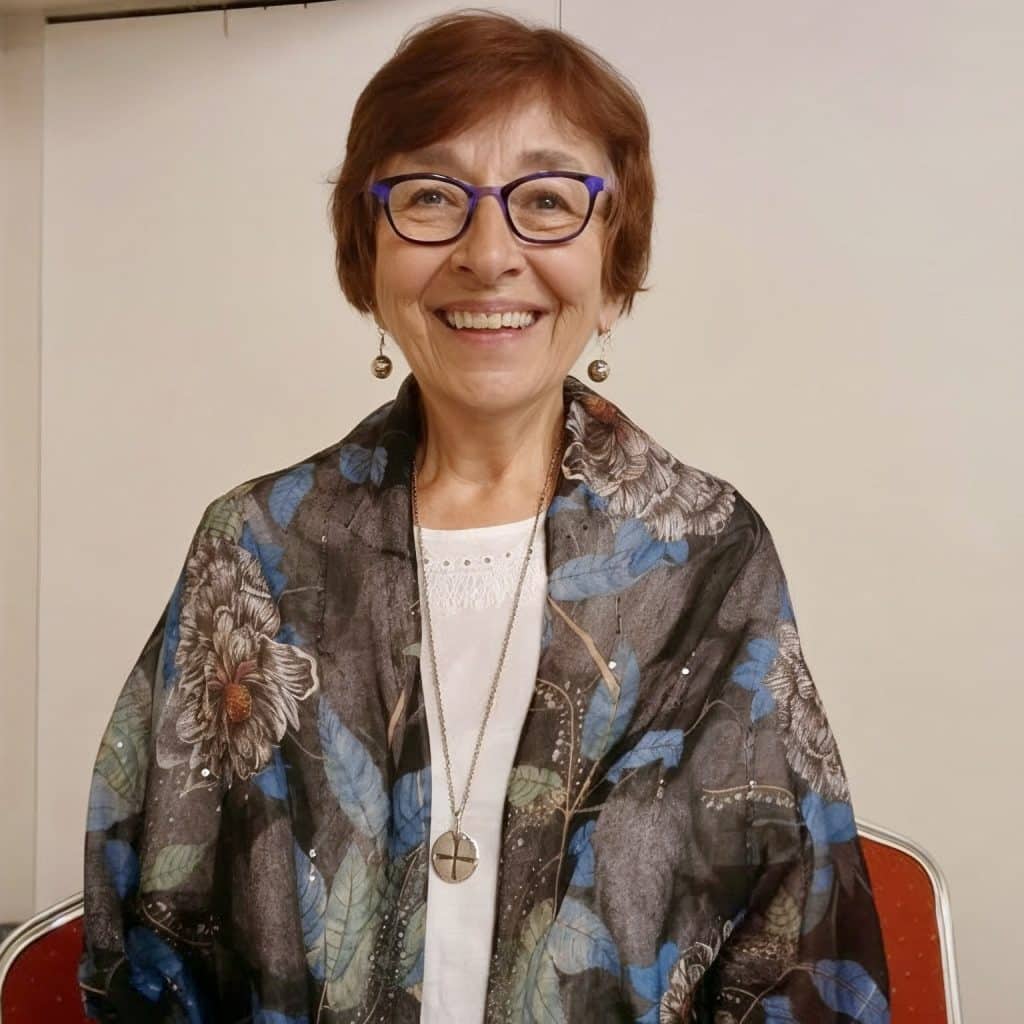
Sr Margaret Zdunich NDS, CBF Executive Director.
The Centre for Biblical Formation (CBF) in Jerusalem continues the mission of Notre Dame de Sion through biblical study rooted in interreligious dialogue, encounter, and the land. Sr Margaret Zdunich, who is the Executive Director of the Centre, reflects on the Centre’s mission, its distinctive approach, and what lies ahead.
Sr Margaret, can you tell us what makes CBF distinctive?
Many institutions offer biblical courses. What distinguishes CBF is its integration of the Bible, the people, the land, and interreligious dialogue.
Participants don’t simply study texts in a classroom. They encounter the biblical world within its geographical and interreligious setting. Learning unfolds through lectures, site visits, guided encounters, and structured theological reflections.
CBF intentionally holds together academic seriousness and spiritual formation. Our programmes are rigorous, yet not purely academic; they invite intellectual engagement alongside personal and communal transformation.
The Centre’s reading of Scripture is shaped by four foundational pillars of the Sionian tradition: People | Land | Text | Interreligious Dialogue. These pillars ensure that interreligious dialogue is not treated as an optional theme, but as a foundational lens through which Scripture is approached.
In this way, CBF offers formation that is intellectually responsible, spiritually grounded, and relationally aware.
How does CBF express the charism of Notre Dame de Sion today?
The charism of Notre Dame de Sion calls for fidelity to Scripture and witnessing to God’s faithful love for the Jewish people, and the building of relationships marked by respect and understanding.
The Centre for Biblical Formation embodies this charism in a uniquely concrete way by offering biblical programmes in Jerusalem and other biblical lands. Here, Scripture is read within its historical, cultural, and living context.
CBF creates spaces where participants engage Scripture with intellectual rigour, spiritual attentiveness, and awareness of the Jewish roots of the Christian faith. Study of Scripture is read within its historical, cultural, and living context, using Jewish sources and having Jewish and Christian professors. Our study programmes are based on four pillars: people, land, text, and interreligious dialogue.
In doing so, the Centre contributes to the ongoing mission of dialogue and reconciliation that has shaped the Congregation for generations. Our presence in Jerusalem is not merely geographic. To form people here is to invite them into encounter: with the land, with living Jewish and Muslim traditions, and with the complexity of the Holy City itself.


What can participants expect in 2026?
The 2026 programme reflects the Centre’s commitment to themes that are both biblically rich and responsive to the challenges of a polarised world.
Programmes will explore:
Each programme integrates classroom learning with on-site engagement and structured dialogue in biblical lands.
A particular highlight is the “Building Bridges of Understanding” programme designed for Notre Dame de Sion educators. This initiative strengthens the pedagogical and spiritual foundations of those entrusted with forming young people within the Sion tradition.
Across all programmes, participants can expect intellectual depth, thoughtful dialogue, and an immersive experience of learning in the land where the biblical story unfolded.


Who are programmes intended for?
The Centre primarily serves those seeking biblical formation rooted in dialogue and encounter. At its heart, CBF welcomes all those willing to engage Scripture thoughtfully, respectfully, and with openness to growth. Certain programmes are for specific groups, e.g. educators and those involved in the Congregation’s ministries.
See the CBF course calendar on the CBF, Jerusalem page.
CBF has a new logo. What does it represent?
The new logo represents both continuity and renewal.
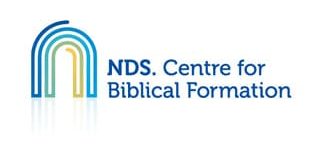
The arched form evokes strength, stability, and openness. Jerusalem is a city marked by thresholds, stones, and ancient arches; this symbol naturally speaks of passage, encounter, and connection. An arch both supports and bridges. It holds weight while creating space. In many ways, this reflects the vocation of the Centre: to stand firmly rooted in biblical formation and the charism of Notre Dame de Sion, while creating space for interreligious dialogue, encounter, and deeper understanding of Scripture using Jewish sources within its living context.
The layered depth within the design suggests that Scripture, history, and identity are never one-dimensional. Formation requires attentiveness to complexity – theological, historical, and relational. Beneath every text and every encounter lies depth that must be explored with patience and humility.
The subtle reflection within the logo emphasises another essential dimension of our work: reflection itself. Biblical formation is not only academic study; it is an invitation to examine how Scripture shapes our understanding of ourselves, our communities, and our relationships with Jewish, Muslim, and other faith traditions, as well as the wider world.
This renewed visual identity signals clarity of mission. It marks a strengthened commitment to serious dialogical and contextually-rooted formation in the land where the biblical story unfolded.
What is CBF’s vision for the future?
The Centre hopes to deepen its contribution to the Congregation’s mission by strengthening global partnerships, expanding access to formation, and ensuring sustainable growth.
In a world marked by polarisation and literal readings of Scripture, there is an urgent need for formation that is historically grounded, theologically sound, and dialogically sensitive.
Our hope is that CBF will continue to serve as a place of encounter where: study leads to understanding, understanding fosters respect, and respect becomes concrete commitment to dialogue, reconciliation, and peacebuilding. Formation here is not an end in itself; it is meant to shape people who return to their communities equipped to build bridges across religious, cultural, and ecclesial divides.
Rooted in Jerusalem, yet oriented toward the wider Church and world, the Centre looks ahead with confidence and renewed purpose.
Visit the CBF website.