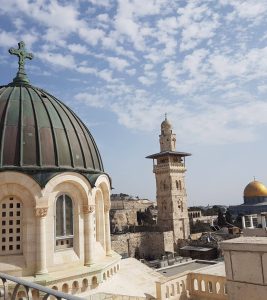
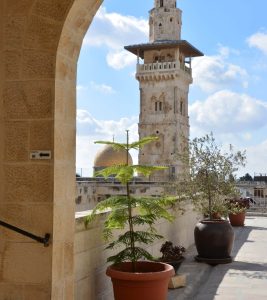
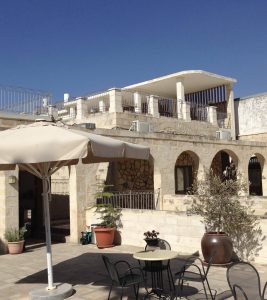
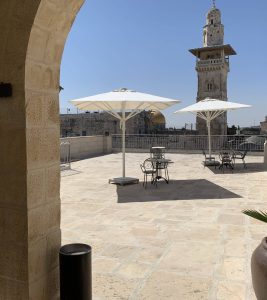
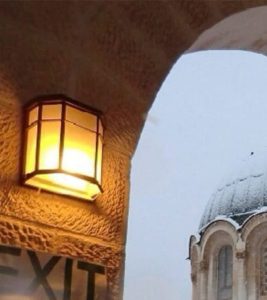
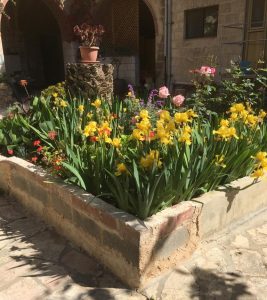
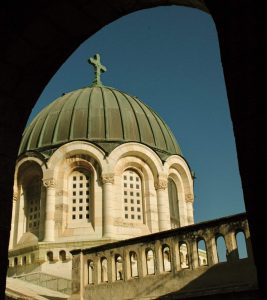
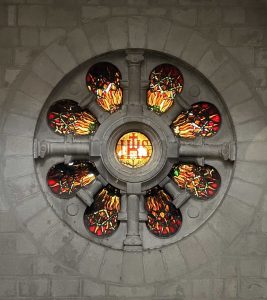
It’s just minutes’ walk from Jewish, Muslim and Christian sacred sites like the Western Wall, the Temple Mount/Al-Haram al-Sharif and the Holy Sepulchre. Guests enjoy the spectacular views of the Old City from the various terraces, and many tell us they appreciate the friendly reception.
The convent of Ecce Homo was built on the Via Dolorosa in the Muslim quarter of the Old City in the 1850s under the supervision of Alphonse Ratisbonne, our founder Theodore’s brother. The community of the Congregation of Notre Dame de Sion arrived in 1856 and began to welcome pilgrims from all over the world as soon as the building works permitted.
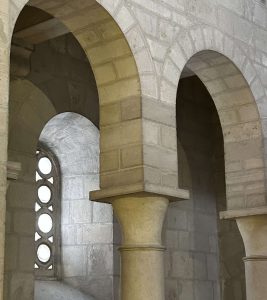
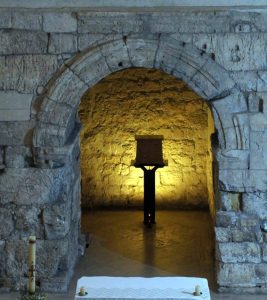
There is much ancient history surrounding the site. An arch built by the emperor Hadrian in 135 CE extends over the street and into the walls of the house itself. In the lower level of the convent are the paving stones called Lithostrotos (Greek), a cistern built by King Herod and a Roman road.
Find out more about Notre Dame de Sion’s history in Jerusalem in our timeline.
Tradition holds that this is the area where Jesus’ Passion took place. “Ecce Homo” (Behold the Man): the words proffered by Pilate as he presented Jesus to the crowd.

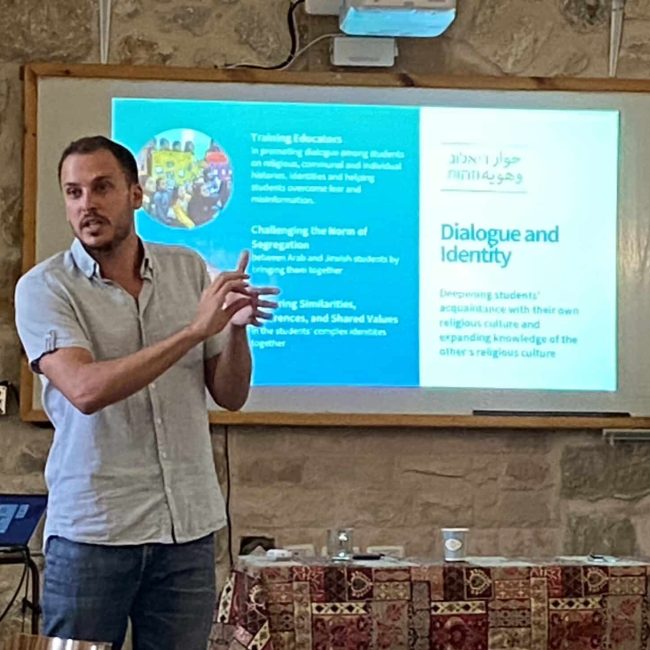
Group bookings are welcome. Meeting rooms are available for pilgrim groups, and lunch can be arranged for groups of between 12 and 60 people.
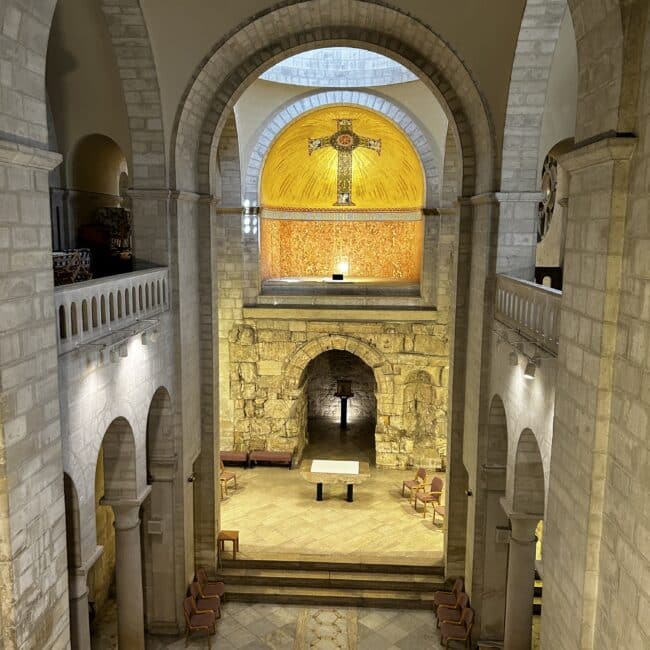
Guests are welcome to pray in the Basilica and join the Eucharist at advertised times. Other services of worship can be arranged.
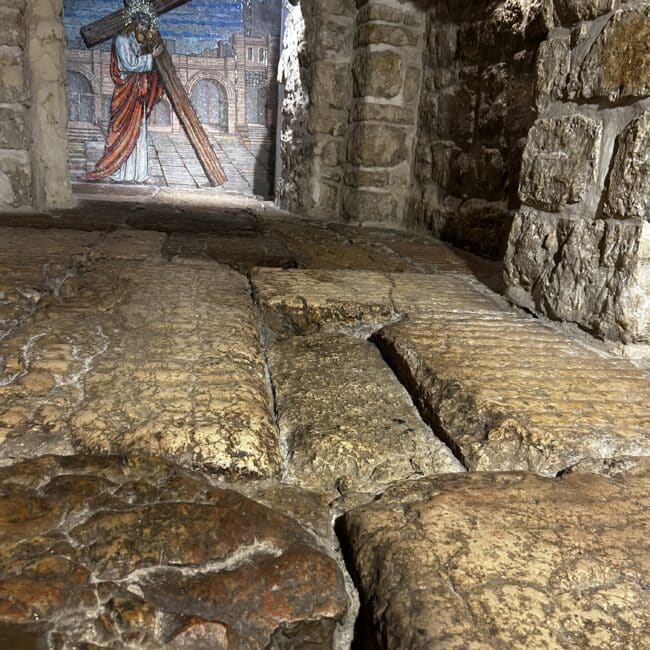
Visiting hours for the archaeological site are 8:00 – 17:00 daily (open for prayer only on Good Friday).
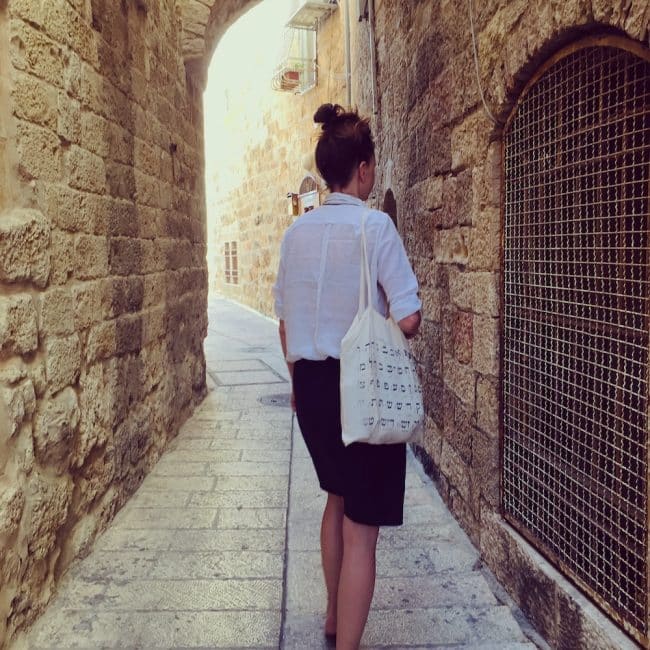
The staff will be pleased to advise you about excursions in the Old City and further afield.
For those who prefer to stay in a historical mountain village, the monastery of Our Lady of Sion in Ein Kerem can serve as an alternative base for visits to the Holy City.
view more