

The event, entitled “Repentance, Repair, and Reconciliation: Religious Resources for Tumultuous Times”, was organised in Hanover, July 12–15, in collaboration with the Deutscher Koordinierungsrat der Gesellschaften für Christlich-Jüdische Zusammenarbeit (DKR).
Over three and a half days, the conference featured keynote lectures and plenary sessions on the theme, alongside more than 20 interactive workshops, site visits, and excursions, drawing speakers and participants from countries including Argentina, Australia, Austria, Canada, Costa Rica, and beyond.
Sisters and other members of the Family of Sion travelled from Australia, Canada, Costa Rica, the Philippines, Poland, Romania, and Rome for this important biennial interfaith event.
The conference opened on Sunday evening with the presentation of the 2026 Seelisberg Prize to Rabbi Dr David Meyer, a scholar of rabbinic literature and a longtime professor at the Cardinal Bea Centre for Judaic Studies of the Pontifical Gregorian University in Rome. The prize is named in memory of the groundbreaking gathering held in the Swiss village of Seelisberg in 1947 to confront centuries of Christian “teaching of contempt” towards Jews and Judaism, which produced the influential “Ten Points of Seelisberg”, a foundational document in the modern renewal of Jewish-Christian relations.
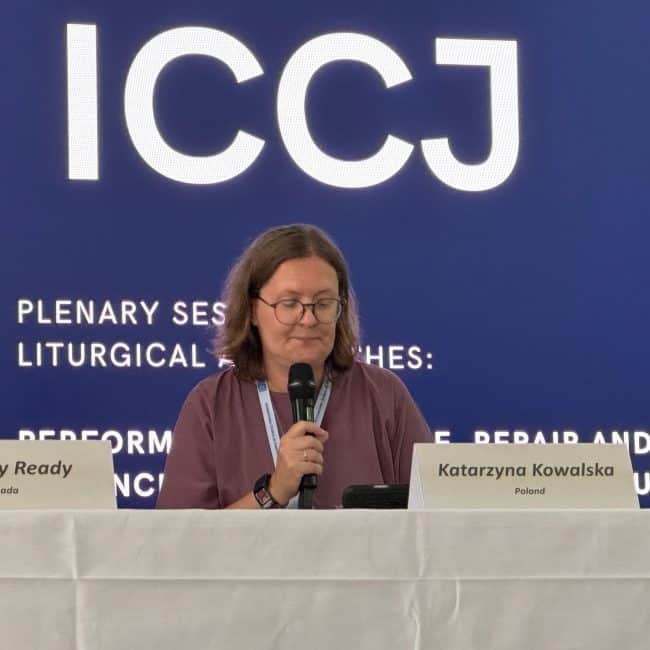
Sr Kasia Kowalska presented in a plenary session about liturgical approaches to repentance, repair and reconciliation.
Sr Kasia Kowalska (Poland), who serves as Vice President of the ICCJ Board, was closely involved in organising the conference as a member of the planning committee and also moderated Plenary Session II on Monday, “Performing Repentance, Repair, and Reconciliation: Learning from Liturgies, Rituals, and Customs”, which explored how the concepts of repentance and reconciliation are expressed through liturgy, ritual, and custom across traditions.
Tuesday afternoon’s programme included a set of field trips around Hanover, including excursions to the House of Religions and the Bergen-Belsen Concentration Camp.
On Wednesday, three other members of the Family of Sion led workshop sessions.
Héctor Acero Ferrer and Mia Theocharis (Canada) co-led a workshop, “Repair in Practice: Confronting Antisemitism in Academic and Interreligious Campus Life”, drawing on practitioner-based experience from North American universities and colleges to explore promising tools and strategies for responding to antisemitism on campus while staying true to the conference’s themes of repentance, repair, and reconciliation.
Mark Walsh (Australia) led a workshop called “Deep Listening: Bridging the Distance Between Us”, inviting participants to practise deep listening as a way to bridge gaps between Jews, Christians, and Muslims in the aftermath of October 7th and Gaza. This workshop drew on insights from the 2025 ACCJ-ICCJ Interfaith Gathering in Melbourne, which was sponsored by Notre Dame de Sion, Australia.
Later that day, the programme turned to lived experience and forward-looking reflection in the closing plenaries. Mark Walsh joined the panel of interfaith practitioners for Plenary Session IV, “Efforts at Repentance, Repair, and Reconciliation: Projects and Initiatives”, sharing lessons from concrete dialogue projects and initiatives. Mark drew on insights gained from working with Aboriginal and Torres Strait Islander People.


In the conference’s final plenary, “Reconciliation, People, and the Planet”, David Castillo (Costa Rica) spoke alongside fellow panellists about the relationship between repentance, repair, and reconciliation and the ecological crisis facing the planet, while Héctor Acero Ferrer moderated the session, guiding the conversation on whether protecting the environment should be a priority for interreligious relations as the conference drew to a close.
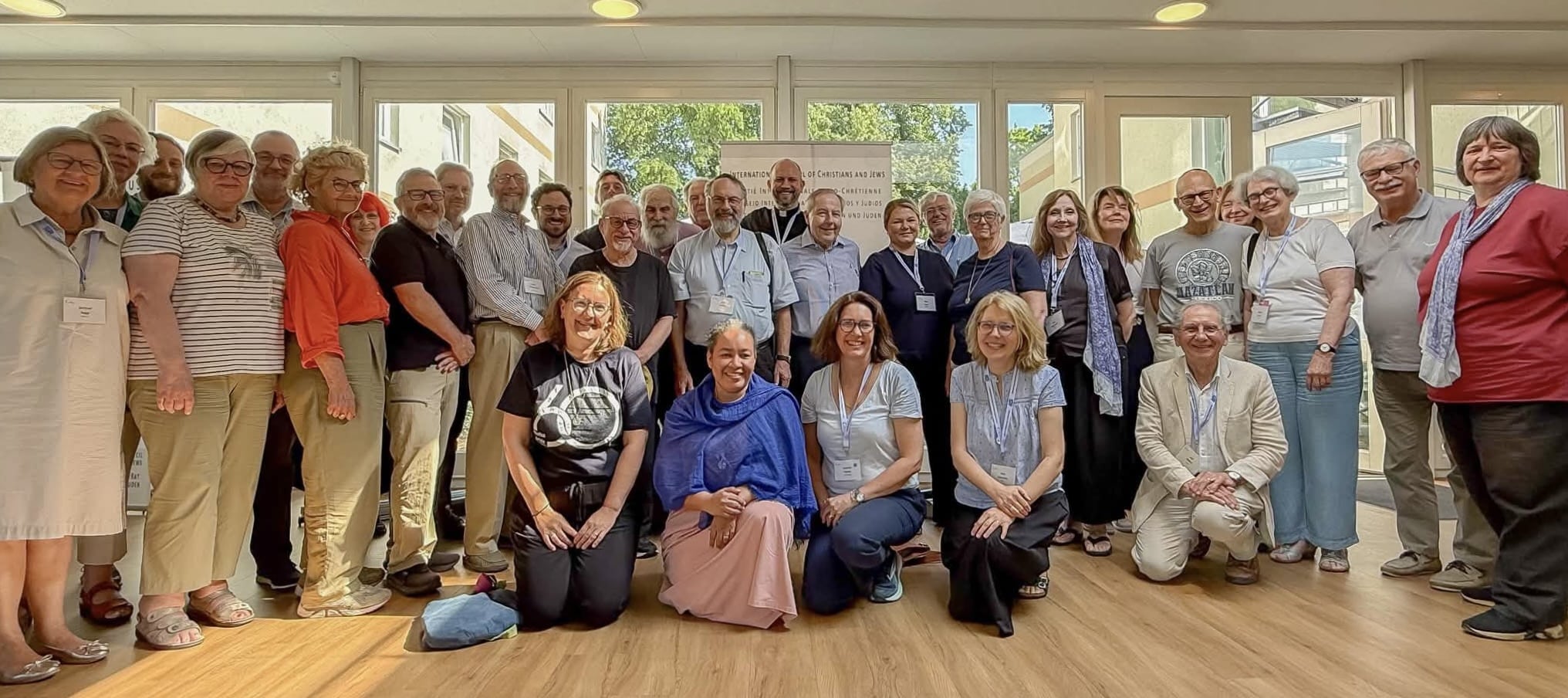
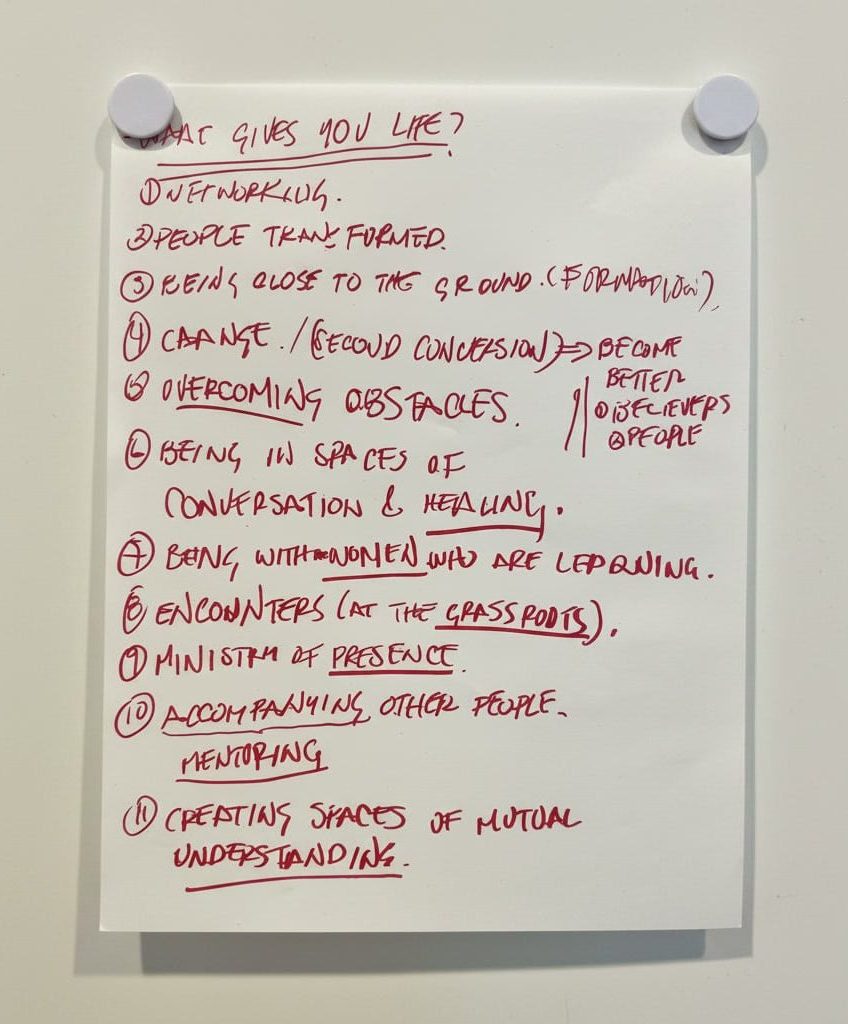
Brainstorming: “What gives us life?”
On Friday, members of the Family of Sion gathered for Sion Day, a time to share experiences of interfaith engagement, map current work across the international Sion family, and connect these efforts with the conference themes of repentance, repair, and reconciliation. Participants reflected individually, in pairs, and in groups on what had challenged, moved, affirmed, or unsettled them during the conference, before considering the practical next steps for sustaining Sion’s commitment to Jewish-Christian and interfaith encounter, dialogue, education, and action.
In a brainstorming session on the question “What brings us life?”, these ideas emerged:
The group reflected on the Family of Sion’s broad involvement in Jewish-Christian and interfaith encounter, dialogue, education and action. A strong theme was that this work is sustained through relationships: networking, accompaniment, mentoring, local encounters, conversation, healing, and the creation of spaces of welcome and mutual understanding. Participants also noted that the work itself is transformative, both for those who take part and for those who facilitate it.
As participants departed Hanover, they carried with them not only memories of a rich and challenging gathering, but a renewed sense of shared vocation. The conference and Sion Day affirmed that repentance, repair, and reconciliation are not abstract ideals, but practices patiently built through listening, relationship, education, and courageous encounter. For the Family of Sion, the days in Hanover strengthened a common commitment to continue this work across cultures and generations, contributing wherever possible to healing, understanding, and hope in a fractured world.
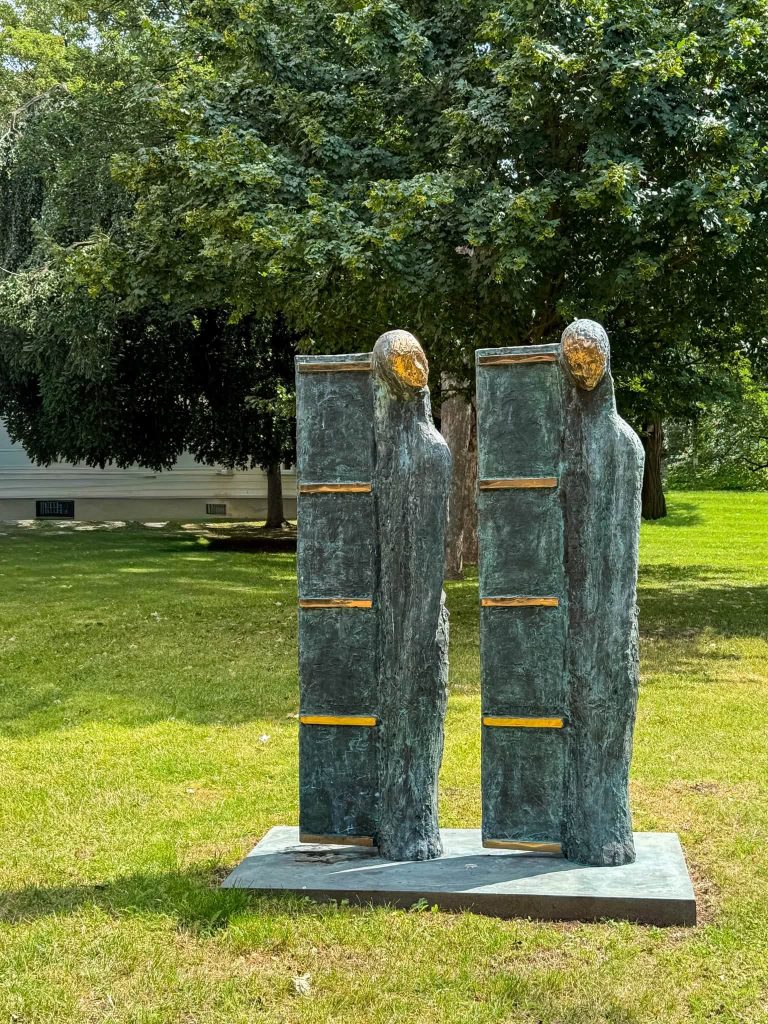
The emblem of this year’s conference was Johan Tahon’s bronze sculpture Zwillinge (Twins). The two life-size female figures represent Christianity and Judaism as equals, reimagining the traditional Ecclesia/Synagoga motif as a symbol of parity and dialogue rather than hierarchy. Its location is also significant: Hanover’s central synagogue once stood nearby, at Rote Reihe 6, before it was destroyed during Kristallnacht on 9 November 1938. By transforming an old image of religious division into one of mutual recognition, Twins reflects the spirit of Jewish-Christian encounter the ICCJ seeks to foster.